
The Benefits of Chess.
Chess is not merely a game. It is a discipline — one of the oldest and most rigorously studied tools for developing the human mind. Here is what the evidence shows.
Chess is the vehicle. Clear thinking is the outcome. The skills built here belong to the student forever.Rayman Singh — Founder, ReelChess
Chess is unique among all activities available to young people. It is simultaneously a game, a competitive sport, an art form, and one of the most rigorously studied cognitive training tools in existence. No other single activity develops such a wide range of mental and emotional skills in such a direct and measurable way.
Unlike passive entertainment, chess demands active engagement at every moment. Every move requires analysis, planning, and decision making under pressure. Every game is a training session for the brain — building the neural pathways that support learning, reasoning, and performance across every area of a student's life.
The research is compelling. Countries that have integrated chess into their school systems consistently see improvements in student performance across mathematics, reading, and science. Chess is not a distraction from education — it is one of the most powerful tools for enhancing it.
Studies from Venezuela, Armenia, and Belgium demonstrate that students receiving structured chess education outperform their peers in standardised testing — particularly in mathematics and reading comprehension. These are peer-reviewed results replicated across cultures and decades.
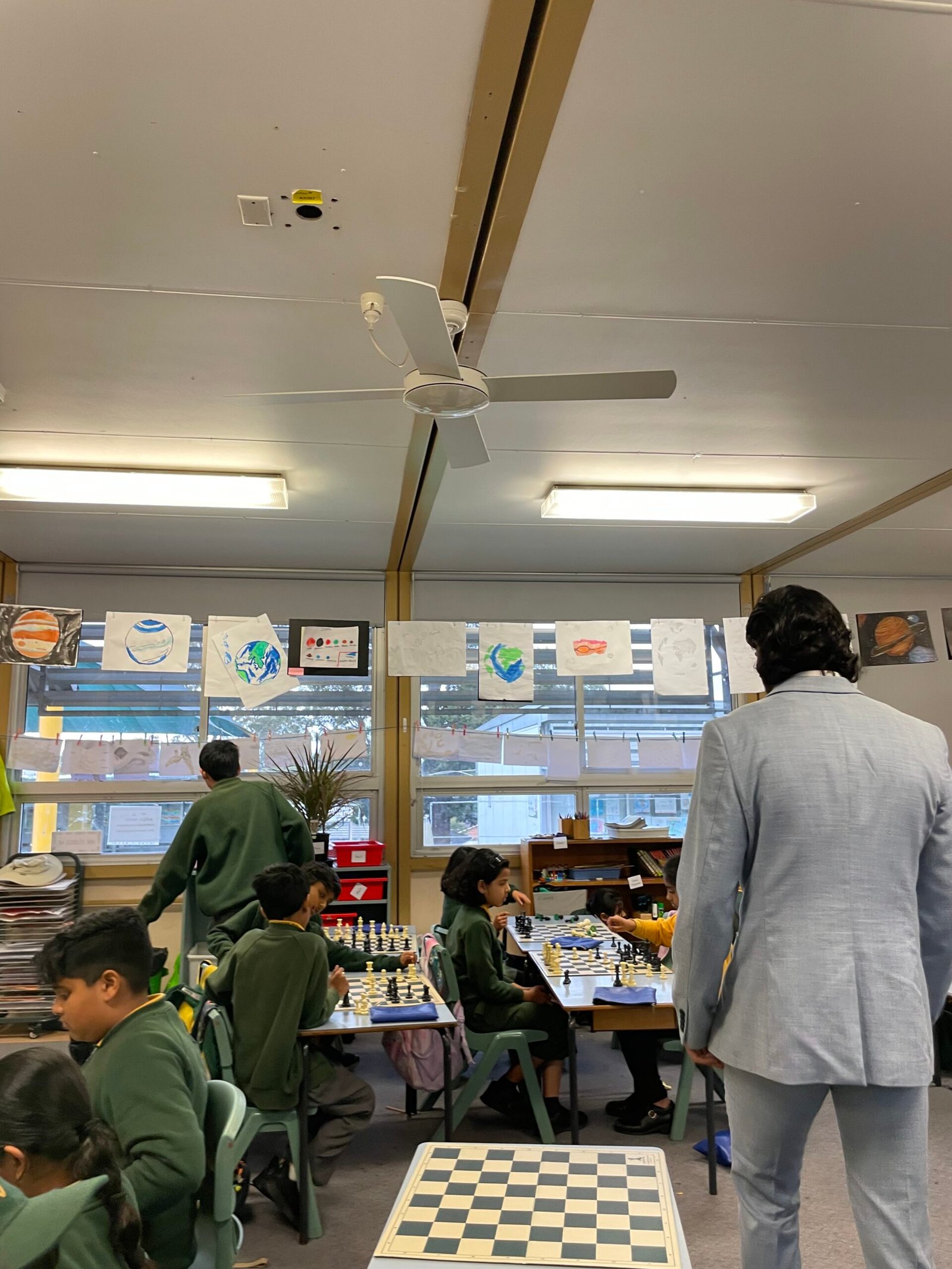
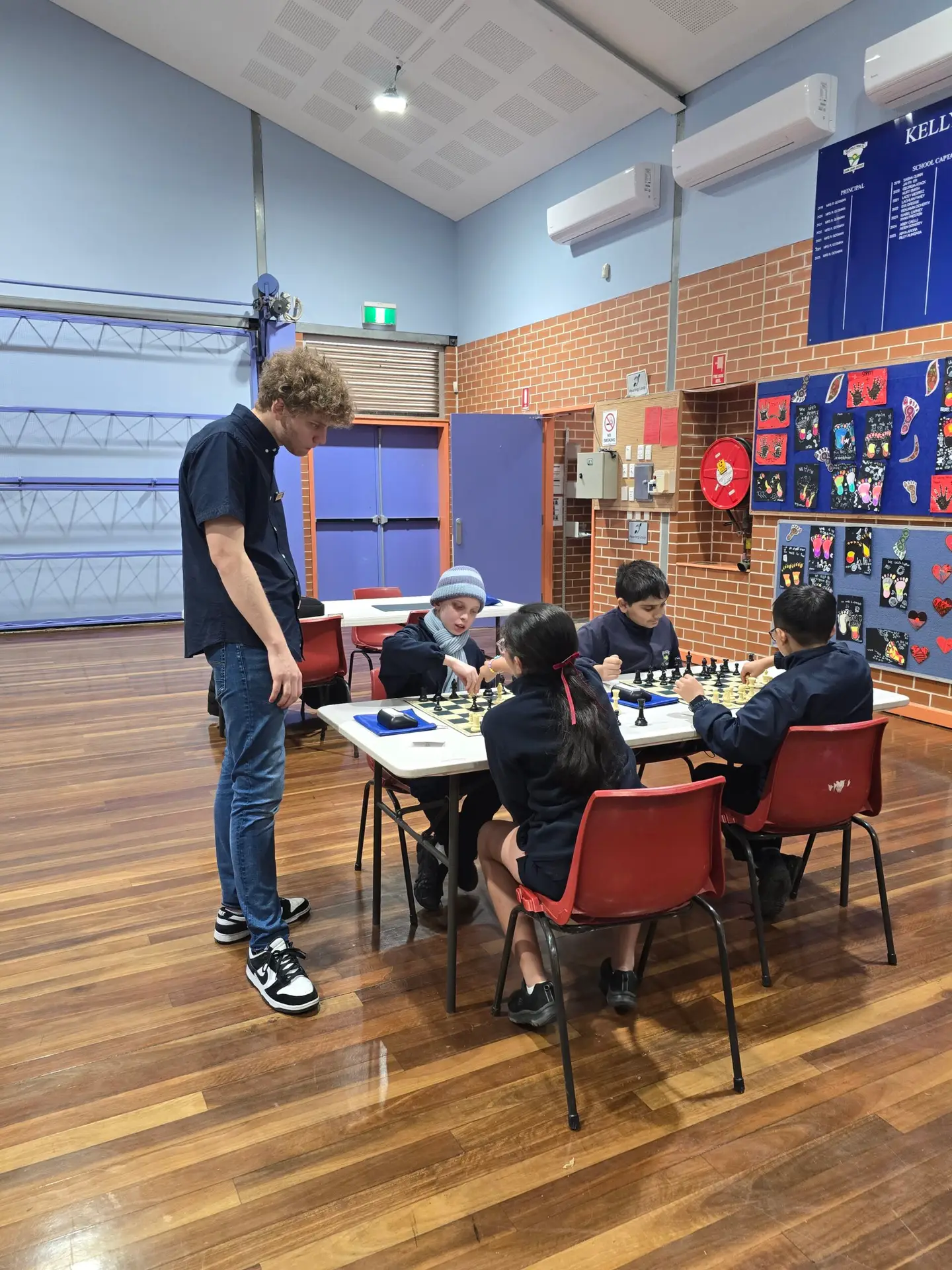
Students during a ReelChess structured coaching session, Sydney NSW
Ten Core Benefits
Critical Thinking
Chess is the purest form of critical thinking training available. Every position demands analysis, evaluation of multiple options, and selection of the best course of action — skills that transfer directly to academic and real world problem solving. Students learn not just what to think, but how to think.
- Evaluate multiple options before deciding
- Identify cause and effect relationships
- Analyse complex situations systematically
- Make informed decisions under pressure
Focus and Concentration
Chess demands sustained attention over extended periods. Regular practice builds the capacity to concentrate deeply — increasingly rare and increasingly valuable in modern life.
- Sustain attention on complex tasks
- Block out distractions deliberately
- Improve attention span progressively
Strategic Planning
Chess teaches students to think multiple steps ahead — formulating plans, anticipating consequences, and adjusting when circumstances change. One of the most transferable cognitive skills a person can develop.
- Plan ahead and think long term
- Anticipate outcomes of decisions
- Balance short term tactics with strategy
Resilience and Grit
In chess you lose. Often. And then you analyse why, learn from it, and come back better. This cycle of failure, reflection, and improvement is one of the most powerful character building processes available.
- Analyse and learn from mistakes
- Develop persistence through difficulty
- Build a genuine growth mindset
Mathematical Thinking
Chess and mathematics share deep structural connections. Pattern recognition, spatial reasoning, logical deduction — research consistently shows chess improves mathematical performance across all age groups.
- Pattern recognition and spatial reasoning
- Logical deduction and proof
- Systematic problem decomposition
Confidence and Self Belief
Structured achievement builds real, earned confidence. When a student earns a certificate, wins a difficult game, or solves a puzzle they have been working on — the confidence gained is genuine because it is based on actual competence, not empty praise.
- Build confidence through real achievement
- Develop poise in competitive situations
- Learn to trust your own judgement
- Gain formal recognition for structured effort
Creativity and Innovation
The greatest players are not just calculators — they are artists. Chess rewards creative thinking and unconventional approaches. It trains analytical and creative thinking simultaneously.
- Find unconventional solutions
- Think analytically and imaginatively
- Explore possibilities before committing
Time Management
Every chess game is played under time pressure. Students learn to allocate time wisely, make quality decisions efficiently, and prioritise when resources are limited — directly applicable to exams.
- Quality decisions under time pressure
- Allocate limited resources efficiently
- Prioritise effectively under pressure
Social Skills and Sportsmanship
Chess is played between two people. Win or lose, the interaction requires respect, patience, and grace. Students develop the ability to compete fairly and engage constructively with peers of all backgrounds.
- Respectful competitive instincts
- Patience and composure
- Genuine sportsmanship
Memory and Pattern Recognition
Chess is one of the most effective exercises for memory development. Remembering openings, recognising tactical patterns, and recalling how positions evolve all strengthen memory in ways that directly benefit academic learning and retention across every subject.
- Strengthen working and long term memory
- Recognise patterns faster and more accurately
- Apply recalled knowledge under pressure
- Build cognitive stamina and mental endurance
What Happens to the Brain During Chess
Research using brain imaging technology shows that chess uniquely engages both hemispheres of the brain simultaneously — the analytical left hemisphere and the creative right hemisphere working in tandem. Regular practice has been shown to increase dendrite growth — the branching connections between brain cells that enable faster, more efficient thinking.
In simple terms: chess literally makes the brain more capable over time. Studies also show chess can help delay the onset of cognitive decline in adults — making it one of the few activities with documented benefits across the entire human lifespan.
Chess activates both analytical and creative brain functions simultaneously — building more neural connections than single-hemisphere activities.
Multiple peer-reviewed studies show chess students consistently outperform peers in maths, reading, and science assessments.
Thinking patterns developed in chess transfer directly to academic subjects, professional environments, and everyday decision making.
Academic Evidence
Decades of peer-reviewed research across multiple countries. Here is what the evidence actually shows.
Mathematics Performance
A New Brunswick, Canada study found students who replaced one maths class per week with chess showed a 17 percent improvement in mathematical problem solving versus control groups.
Nations with Chess in Schools
Over 32 countries have integrated chess into their national school curricula — including Armenia, Russia, and Hungary — all citing measurable improvements in student performance.
Measured Intelligence Increases
A Venezuelan study of 4,000 students found both boys and girls showed significant IQ score increases after just four months of structured chess instruction.
Literacy and Language Skills
Research from Pennsylvania showed chess students in an at-risk demographic significantly outperformed peers in reading comprehension after one year of chess instruction.
Chess at Every Age.
Young Children
The early years are when the brain is most plastic and receptive. Chess at this age lays foundations for strong thinking habits that benefit students throughout their entire education. We start from age 5 — no child is too young.
- Foundational logical thinking
- Early mathematical reasoning
- Concentration and patience
- Healthy competitive instincts
- Confidence through achievement
Teenagers
For teenagers navigating exams and decisions about their future — chess provides a structured outlet that directly supports academic performance. Certificates support scholarship and selective school applications.
- Improved exam performance
- Resilience and emotional management
- Scholarship and school applications
- Structured achievement and recognition
- Competitive confidence for assessments
Adults
Chess is one of the few cognitive activities with documented benefits for adults and seniors — keeping the mind sharp, active, and engaged. Studies show chess can help delay cognitive decline and maintain mental acuity throughout life.
- Maintains cognitive function
- Delays onset of cognitive decline
- Social connection and community
- Structured mental exercise
- Healthy ageing and wellbeing
"Chess is not just entertainment. It is mental training for life — and every skill it builds belongs to the student forever, long after the board is put away."
Rayman Singh · Founder, ReelChess · Under 12 State Champion
Common
Questions.
Everything parents, students, and schools typically ask before getting started with ReelChess. Contact us directly if your question is not answered here — we respond within 24 hours.
We typically start from age 5. Kindergarten age children can absolutely learn chess — they are not too young. We work with students from their very first lesson all the way to competitive tournament play.
No. We provide absolutely everything — chess sets, boards, timers, and all materials. Your child just needs to show up.
For online sessions all you need is a device with a camera and internet connection. We guide you through setup before your first session.
Our policy varies slightly by program type, but the general approach is:
- No refunds for missed sessions once a term has commenced
- If you notify us in advance, we can offer a pro-rata adjustment where appropriate
- Make-up sessions are not guaranteed — they depend on availability
- Students joining partway through a term receive a reduced pro-rata fee
We always do our best to be flexible and fair while maintaining the structure of our programs.
Absolutely. Many of our students start with zero chess knowledge. Our True Beginners Saturday group is specifically designed for students who have never touched a chess piece — we start from the very first move.
No experience is needed for any of our programs. We assess every student and place them in the right level group.
For Term 2 2026, students enrol and pay through our booking portal. We accept:
- Credit and debit card via Stripe
- Bank transfer
- PayPal
If you enrol partway through a term, a reduced pro rata fee applies based on remaining sessions.
Every student receives:
- Structured coaching with progressive curriculum
- Video resources and lesson recaps after sessions
- Progress tracking throughout the term
- Certificate on completing development milestones
- Regular feedback for parents
The first printed certificate is Gold. Bronze and Silver are digital — all formally recognised by schools and educators.
Yes. Scholarships can be obtained for high school using ReelChess as a reference — many of our students have successfully done so.
Do not hesitate to reach out if you need something personal written, especially if your child is excelling. We are happy to provide letters of support and documentation of achievement for any application.
Chess is one of the most direct problem solving training tools available. Every move requires you to analyse the position, identify threats, calculate outcomes, and decide under time pressure.
- Break complex problems into manageable parts
- Pattern recognition — spotting opportunities others miss
- Multi-step calculation and logical deduction
- Adaptability when plans do not work out
- Confidence in making independent decisions
Yes to both. ReelChess runs open tournaments, interschool tournaments, and in-school tournaments throughout the year. Students in our programs have access to competitive pathways as they develop.
We also run holiday online programs during school breaks — a great way to keep improving and stay sharp between terms.
School program pricing starts from $20 + GST per student per lesson for a standard one hour session. 90 minute sessions start from $30 + GST and lunchtime sessions from $15 + GST.
Terms are typically 8 to 10 weeks. Exact pricing confirmed before any program begins.
Contact us to discuss your school →Saturday Group Training — Beginner, Intermediate, and True Beginners groups:
- $200 for a 5 week term
- $350 for a 10 week term
Advanced Tournament Prep Group:
- $275 for a 5 week term
- $500 for a 10 week term
All equipment provided. Sessions carry over to the next term if the term is not completed.
Reach us through any of the following:
- Contact form at reelchess.com/contact/
- Phone: +61 402 769 387
- General enquiries: admin@reelchess.com
- Schools and partnerships: schools@reelchess.com
We respond within 24 hours — usually much faster.
Still have a question? We are happy to help.
Contact UsGive Your Child
Every Advantage.
ReelChess programs develop every benefit on this page through structured coaching, progressive curriculum, and genuine expert instruction.